4.9292 Google reviews

Three ways to get it done

Online divorce forms, mediation, or a lawyer?What you actually get.

Forms prepare your paperwork. A lawyer advises you and represents you. A mediator helps the two of you agree and write it down. Each one solves a different problem, and the right one depends on how much the two of you already agree on and what is on the table.

  • What each option gives you, side by side
  • Who each one fits
  • Where couples get tripped up: the house, retirement accounts, parenting plans
  • A free 15-minute call to see if mediation fits

Talk with Ryan or Kate · free · 15 min · nothing to sign

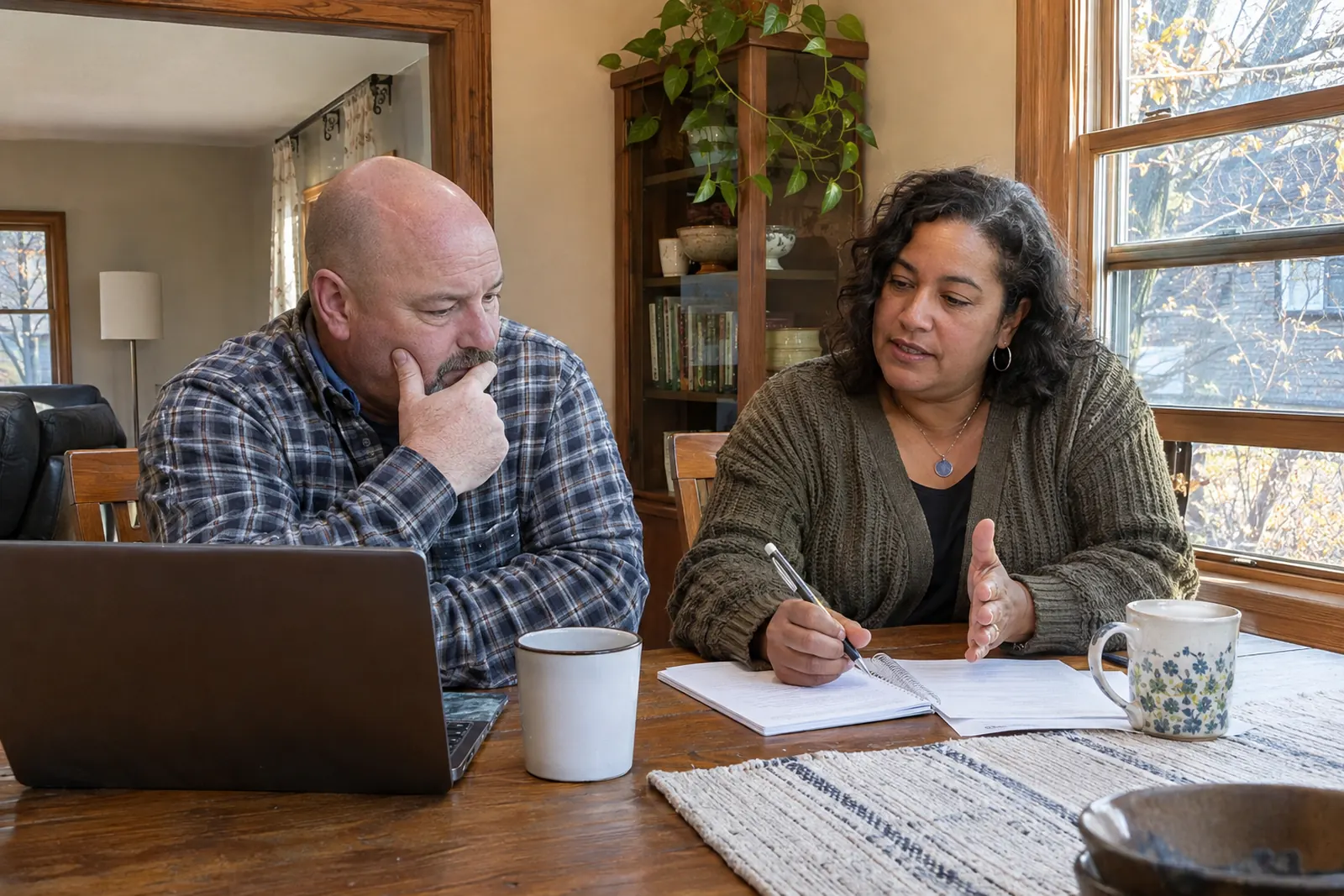
A couple at a table with a laptop and notebook, talking through next steps
Your agreement, in your wordsForms · mediation · a lawyer

Direct answer. If you and your spouse agree on everything and the finances are simple, an online forms service can be a low-cost way to get the paperwork prepared. If you agree on some things and need help with the rest, mediation helps the two of you decide together and write it down. If you want advice on your rights, or the situation is contested, a lawyer is the right call. Some couples combine them: mediate the agreement, then have an attorney review it before signing.

General information, not legal advice. Ryan facilitates; he doesn’t practice law or give legal advice. Court rules and forms differ by state, so ask a lawyer licensed in your state what applies to you.

What each one gives you

Three options, three different jobs

They aren’t rivals. Couples pick one, or combine them, depending on where they are.

Online divorce forms

You answer questions and the service prepares the paperwork for your state. It is built for speed and a lower upfront cost. It doesn’t help the two of you reach agreement on questions you haven’t settled, and it doesn’t give legal advice. If a service offers an optional attorney review, check what it includes.

Mediation

A neutral mediator helps the two of you work through the hard issues and put your agreement in writing. The mediator doesn’t take sides, decide for you, or give legal advice. You decide, together.

A lawyer

A lawyer advises you on your rights and options, represents you, and handles the legal filings and court process. Each spouse who hires one has their own lawyer. It is the right call when you want advice and an advocate, or when the situation is complex or contested.

Online divorce forms, mediation, and a lawyer compared
CompareOnline formsMediationA lawyer
What it isSoftware that prepares court paperwork from your answersA neutral who helps the two of you reach agreementLegal advice and representation for you
Legal adviceNo. Information, not adviceNo. Ryan facilitates; he doesn’t practice law or give legal adviceYes, for their own client
Who it servesWhoever files, based on the answers enteredBoth of you, neutrallyOne of you. Each spouse has their own lawyer
You walk away withCompleted forms, ready to review and fileAn agreement you co-wrote in your own words during the sessionAdvice, negotiation, drafted documents, and court representation as needed
CostVaries by service. Check what is includedOn Zoom, $1,695 per person: a flat fee known up frontVaries by lawyer and by how much work your case needs. Ask for the fee structure in writing

Not included in any of these: your court’s filing fee, which the court charges no matter how you divorce.

Who each one fits

Match the option to where you are

Online forms fit when

You and your spouse agree on every term. The finances are simple: no house to keep and no retirement accounts to divide. Any parenting arrangement is short and specific. You are comfortable reading your state’s instructions and double-checking the details.

Mediation fits when

You agree on some things and need help with the rest. You want to decide together instead of handing it to a judge. There is a house, a retirement account, or kids, and you want the details written down clearly.

A lawyer fits when

You want advice on your rights before you agree to anything. Your spouse won’t engage, or the conflict is high. There is a complicated asset, such as a business or inherited property. Safety is a concern.

These aren’t either-or. Some couples mediate first, then prepare the court papers themselves using the court’s self-help forms, use a forms service, or hire a lawyer. We don’t draft court documents or file anything with a court.

Where couples get tripped up

The details that cause trouble later

Whichever route you choose, these are the places where an agreement that looked finished turns out to have a gap.

The house and the mortgage

Agreeing that one of you keeps the house is the easy part. The loan is the harder part: an agreement or court order doesn’t, by itself, take a name off a mortgage. Taking someone off the loan generally means a refinance or the lender’s approval, and the lender looks at income and credit. Plan the refinance, the timeline, and what happens if it doesn’t go through. See mortgage assumption and refinancing in divorce.

Retirement accounts

Dividing some retirement accounts takes a separate court order, which an attorney or a specialist prepares. We don’t prepare it. For some employer plans this order is called a QDRO. Mediation can settle how the accounts are divided; the order that carries it out is its own step. See dividing retirement accounts in divorce mediation.

A vague parenting plan

“Reasonable parenting time” and “holidays shared fairly” feel fine while you are getting along. They are hard to follow when you aren’t. A workable plan names the schedule, the handoffs, the holidays, and what happens when plans change. See the Minnesota parenting plan guide.

Signing without a second look

Whichever route you choose, a fresh pair of eyes helps. Either of you can have your own attorney review the agreement before you sign. It is an option, and it is your call.

The Flannel People Mediation Method

What you get with us: an agreement co-written in the session

The process is hyper-engineered: an individual meeting with each of you, a step-by-step intake, then a prepared session on Zoom. You aren’t starting from a blank conversation.

  1. 1

    An individual meeting with each of you

    You meet your mediator one-on-one first. It builds trust, lowers defensiveness, and prepares you for the session.

  2. 2

    A step-by-step intake

    The intake gathers information piece by piece, thorough without being overwhelming. It builds your balance sheet of assets and debts and organizes your parenting topics.

  3. 3

    The session

    You and your spouse work through the topics together on Zoom and co-write your agreement in your own words during the session. It is your agreement in writing, not a court filing.

Zoom, in all 50 states plus DC

Zoom works in all 50 states plus DC. In-person options are in Minnesota: a St. Paul-area conference room or a rented retreat cabin. The fee is a flat fee known up front, set by where you meet.

What the fee covers

On Zoom, $1,695 per person covers the individual meeting, the step-by-step intake, and the session. It doesn’t include your court’s filing fee, or an attorney if either of you wants one to review the agreement.

See how the cost works →

Your mediator may be Ryan or Kate. Ryan facilitates; he doesn’t practice law or give legal advice. Kate McLaughlin is listed on the Minnesota Judicial Branch’s Rule 114 roster for family mediation. Ask us which of us would mediate your sessions.

Safety

If you are in danger, call 911.

Joint mediation may not be the right fit if there has been abuse, if one of you is afraid of the other, or if someone feels unsafe.

The National Domestic Violence Hotline is 1-800-799-7233. You can also text START to 88788.

We do not give advice about staying in or leaving an unsafe home. This page does not cover those situations.

Questions people are asking

Forms, lawyers, and mediation

Not always, and it depends on your state and your situation. Some couples who agree on everything complete the paperwork themselves or with a forms service. A lawyer is the right call when you want advice on your rights, when things are contested, or when something complex is involved. Mediation sits between the two: you reach the agreement together, and either of you can have your own lawyer review it before you sign. For questions about what you need in your state, talk with a lawyer licensed there.

You can agree on a split, and writing it down clearly is the first step. Dividing some retirement accounts takes a separate court order, which an attorney or a specialist prepares. We don’t prepare it. Mediation can settle how the accounts are divided; the order that carries it out is its own step. For bank and savings accounts, write down which accounts, what amounts, and as of what date.

Yes. Online divorce services are a real option, especially when a couple agrees on everything and the situation is simple. They prepare paperwork from the answers you enter. They don’t help the two of you reach agreement, and they don’t give legal advice. If you are still working out the house, the money, or the schedule, mediation helps with those conversations first.

Each is a way to get the paperwork prepared. Rules differ by state, including who other than a lawyer may prepare legal documents for someone else, so check your court’s self-help pages. In Minnesota, the court’s Self-Help Center is a free place to start. Mediation is a different step: it is how the two of you decide what goes into the paperwork. Flannel People Mediation doesn’t draft court documents or file anything with a court.

Start with what the two of you already agree on, and bring the open questions to a neutral. At Flannel People Mediation, the fee is $1,695 per person on Zoom, a flat fee known up front. The individual meeting and the step-by-step intake prepare you, so the session isn’t spent hunting for documents. Your court’s filing fee is separate, and so is an attorney’s review if either of you wants one.

That is a common kind of arrangement: one spouse keeps the house, refinances, and pays the other an agreed amount. Settle how the home is valued, the amount and timing of the payment, the refinance deadline, and what happens if the lender says no. The lender decides whether you qualify, and an agreement doesn’t change that. For advice on your own situation, talk with a lawyer or a lender.

No. You can book mediation without a lawyer, and either of you can have your own attorney review the agreement before you sign. Some people also talk with a lawyer before or during the process. That is your call.

No. A mediator doesn’t decide anything or take sides. You and your spouse make the decisions, and you co-write the agreement in your own words during the session. Ryan facilitates; he doesn’t practice law or give legal advice.

Parenting topics are part of the intake and the session: you work out the schedule, the handoffs, and the holidays together and co-write them in your own words. We don’t prepare court documents, so we don’t draft a parenting plan for filing. A plan that names specifics is easier to follow than one that says “reasonable.” Court requirements differ by state, so ask your own lawyer or your court what applies to you.

No. Zoom works in all 50 states plus DC. In-person options are in Minnesota: a St. Paul-area conference room or a rented retreat cabin. For legal questions in your state, talk with a lawyer licensed there.

Free 15-minute call

Pick a time for your free 15-minute call.

Talk with Ryan or Kate about whether mediation fits where you and your spouse are. Come alone or together. Nothing to sign.

Reply within the hour(during normal business hours)

Zoom works in all 50 states plus DC. We help two people who don't agree on really tricky issues come to an agreement and put that agreement in writing. We don't draft court documents, we don't file, we don't do anything with the courts, and we don't give legal advice. Or text us: (763) 316-8323.

Educational Disclaimer: The information provided on this website is for educational purposes only and is not intended as legal advice, therapeutic advice, or therapy. Flannel People Mediation is a mediation service provider only. We help two people who don't agree on really tricky issues come to an agreement and put that agreement in writing. We don't draft court documents, we don't file, we don't do anything with the courts, and we don't give legal advice. We do not provide therapeutic services. For legal questions, talk to your own attorney or the court's Self-Help Center.

Flannel People Mediation provides mediation services only. Ryan McLaughlin does not provide legal, insurance, valuation, tax, financial, or business advice, and mediation does not replace your own counsel or advisors.


Follow our work in Google

Tell Google you want to see more of our writing on divorce and mediation. It takes one tick of a box, and it changes your results, not ours.

Make us a preferred source